← Global Energy Demand & Coal Market Trends 2026: What You Need to Know
If you've been watching the news lately, you already know that the energy conversation is getting louder and more urgent by the day. In this guide, you're going to get clear, honest look at where we stand in2026 with the shift from fossil fuels to renewable energy — what's driving it, what's slowing it down, what the real costs look like, and what it all means for everyday life. Whether you're a homeowner thinking about solar panels, a curious citizen trying to make sense of energy policy, or someone who just wants to understand the world little better, this is the breakdown been looking for.
Understanding the Energy Landscape 2026
The global energy mix 2026 looks meaningfully different from just a decade ago. Solar and wind capacity have surged to record levels, battery storage technology has become genuinely affordable for the first time, and major economies put legally binding targets on the table. At the same time, fossil fuels — coal, oil, and natural gas — still account for the majority of the world's primary energy supply. That tension between an old system that still largely runs world and a new one that's growing fast, is exactly makes this moment so interesting and so consequential.
The transition isn't a binary flip of switch. It's a long, complicated process involving infrastructure, investment, policy behavior change, and geopolitics tangled together. The honest truth is that both systems are going to coexist for years, maybe decades, even as the balance shifts. Understanding that reality is the starting point for any serious about where we're headed.

Why the Push Away From Fossil Fuels Is Accelerating
The case against continuing to rely on fossil fuels has never been stronger, and in2026 the evidence is visible ways hard to ignore. Extreme weather events are more frequent and more costly. Scientific consensus on climate change has hardened into something that even most skeptical governments finding difficult to dismiss. And perhaps most practically, the economics shifted dramatically. Renewable energy is now the cheapest source of new electricity generation in most parts of the world — not because of subsidies alone, but because the underlying technology has matured and scaled
Energy security another massive driver. Countries depend heavily on imported oil and gas learned lessons during the supply disruptions of the early 2020s. Building out domestic renewable capacity reduces vulnerability significantly. When sun shines and wind blows on your territory, nobody can embargo it or jack up the price overnight. That's a geopolitical argument that resonates across political spectrum, and it's been one of the more powerful forces pushing governments toward renewables regardless of their climate positions.
The Real Costs of the Transition
Here's where it gets real where a lot of the public debate gets oversimplified. Yes, renewables are getting cheaper, but the transition itself is expensive. The existing fossil fuel infrastructure — pipelines, refineries, power plants, gas stations — represents trillions of dollars in assets that either need to be repurposed, retired early, or written off.'s not a small thing. Workers fossil fuel industries face genuine disruption, and communities built around coal mines oil fields face existential economic questions clean energy promises alone don't automatically answer.
Grid infrastructure is another major cost. Integrating large amounts of solar and wind power, which are intermittent by nature, requires massive investment in transmission lines, grid modernization, and storage. In2026, battery storage has improved enormously, but building out the storage grid capacity to handle a fully renewable-dominated is still an ongoing expensive project. These costs are real, and pretending they aren't doesn't serve anyone well.
That said, the costs transitioning are also enormous increasingly well-quantified. Climate damage health costs air pollution, and the long-term price of fossil fuel dependency all factor into a complete accounting you put full picture together, the economic case for transitioning, even accounting for transition costs, isinely compelling.

Renewable Energy Technologies Leading the Charge
Solar photovoltaic technology has been the standout story last decade. Panel costs have dropped by over 90% since 2010, 2026 rooftop solar is genuinely accessible for a wide range of homeowners. Utility-scale solar farms being built at pace that would have seemed implausible not ago. The technology keeps improving too — higher efficiency panels, better durability, and smarter integration with storage systems.
Wind power, both onshore and offshore, has also scaled dramatically. Offshore wind in particular has matured into a serious industry, with massive turbines capable of generating enormous amounts of power from coastal open-ocean installations like the UK, Denmark, and China substantial offshore wind capacity, and the United States and others are following rapidly
Beyond solar and wind, there's real momentum in green hydrogen,othermal energy, and next-generation nuclear including small modular reactors that moving concept to early deployment. The energy isn't a-technology story — it's a portfolio, and having multiple clean energy sources strengthens the overall resilience.
What Fossil Fuel Companies Are Actually Doing
It's worth being clear-eyed about this. The major oil gas companies are in different places the transition Some have made substantial investments in renewable energy and are repositioning themselves as broader energy companies. Others have largely continued their core business while making strategic announcements that better on paper than in actual capital allocation. And a few have actively worked to slow complicate the transition through lobbying and disinformation efforts.
In 2026, shareholder pressure regulatory requirements, and the genuine business of energy market shifts are forcing more these companies to take seriously. But "taking seriously" covers a wide range of actual. As consumer, citizen, or investor, it pays to look at these companies are actually doing with their money not just what their communications teams saying.
Policy Politics, and the Global Picture
Energy policy in 2026 is genuinely complex and variesously by country. The United States has significant energy investment flowing legislation passed in the 2020s, though political headwinds have created some uncertainty around-term policy continuity. The European Union has maintained aggressive decarbonization targets further along in its transition than most other major economies. China is simultaneously world's largest emitter and its largest investor in renewable energy — a contradiction that reflects scale complexity of its economy.
Developing nations face particularly difficult version of this challenge. Many case with legitimacy, that they should opportunity to develop their economies same way that rich countries did using cheap before asked to bear the costs of transition. The global energy justice dimension of this conversation is one that wealthier nations and international institutions are going to have to reckon with seriously if global transition is going to succeed.
If you're thinking about your own energy choices in 2026, the landscape is genuinely encouraging. Home solar and battery storage systems become significantly accessible practical. Electric vehicles have improved dramatically in range performance, and affordability, and the charging infrastructure, while still uneven, is substantially better than it was a few years ago. Heat pumps for heating and cooling are increasingly cost-competitive with gasbased systems in most climates.
Your utility provider local mix matter a lot for how your electricity actually is. In many regions, the grid has cleaned up significantly, meaning electrifying your home and transportation is a meaningfully loweremissions choice than it was even five years ago. Checking your local energy percentage and pushing for community municipal energy initiatives are to accelerate the transition at level you can directly influence.
Conclusion
The transition from fossil fuels to renewable defining of our time, and 2026 finds us at a point where the direction is clear even if the pace path remain contested Renewables are cheaper, cleaner, and more capable than ever before. The economicopolitical logic transitioning has strengthened considerably At the same time, the challenges are real — costs, infrastructure, equity, and theeer scale of what needs to change are not things to wave away. The honest picture of genuine progress alongside difficulty, with enormous stakes on both sides of the ledger. Staying informed engaged, and willing to look at the full of the situation is the most useful thing any us can do as continues unfold.
Teks Pancasila: Lengkap Dengan Makna Sila Dan Simbolnya

Teks Pancasila: Lengkap dengan Makna Sila dan Simbolnya
Arti Simbol Pancasila – Artofit

Arti simbol pancasila – Artofit
Detail Gambar Simbol Pancasila Dan Maknanya Koleksi Nomer 12

Detail Gambar Simbol Pancasila Dan Maknanya Koleksi Nomer 12
Lambang Pancasila Dan Penerapannya Di Kehidupan Sehari-hari – Telusur

Lambang Pancasila dan Penerapannya di Kehidupan Sehari-hari – Telusur ...
Isi Teks Pancasila Lengkap Dengan Sejarah, Lambang, Dan, 57% OFF

Isi Teks Pancasila Lengkap Dengan Sejarah, Lambang, Dan, 57% OFF
Gambar Lambang Sila Pancasila

Gambar Lambang Sila Pancasila
Lambang Pancasila: Simbol, Arti, Dan Maknanya

Lambang Pancasila: Simbol, Arti, dan Maknanya
Lambang Pancasila: Simbol, Arti, Dan Maknanya

Lambang Pancasila: Simbol, Arti, dan Maknanya
Lambang Pancasila Dan Artinya - Szepsegpotty

Lambang Pancasila Dan Artinya - szepsegpotty
Simbol Dan Bunyi Pancasila | Simbol Pancasila, Pancasila Day

Simbol dan bunyi pancasila | Simbol pancasila, Pancasila day ...
Arti Lambang Pancasila, Burung Garuda Dan Lima Sila Pancasila - Varia

Arti Lambang Pancasila, Burung Garuda dan Lima Sila Pancasila - Varia ...
Ada Yang Belum Tahu Arti Lambang Pancasila, Makna Dan Bunyinya? Berikut
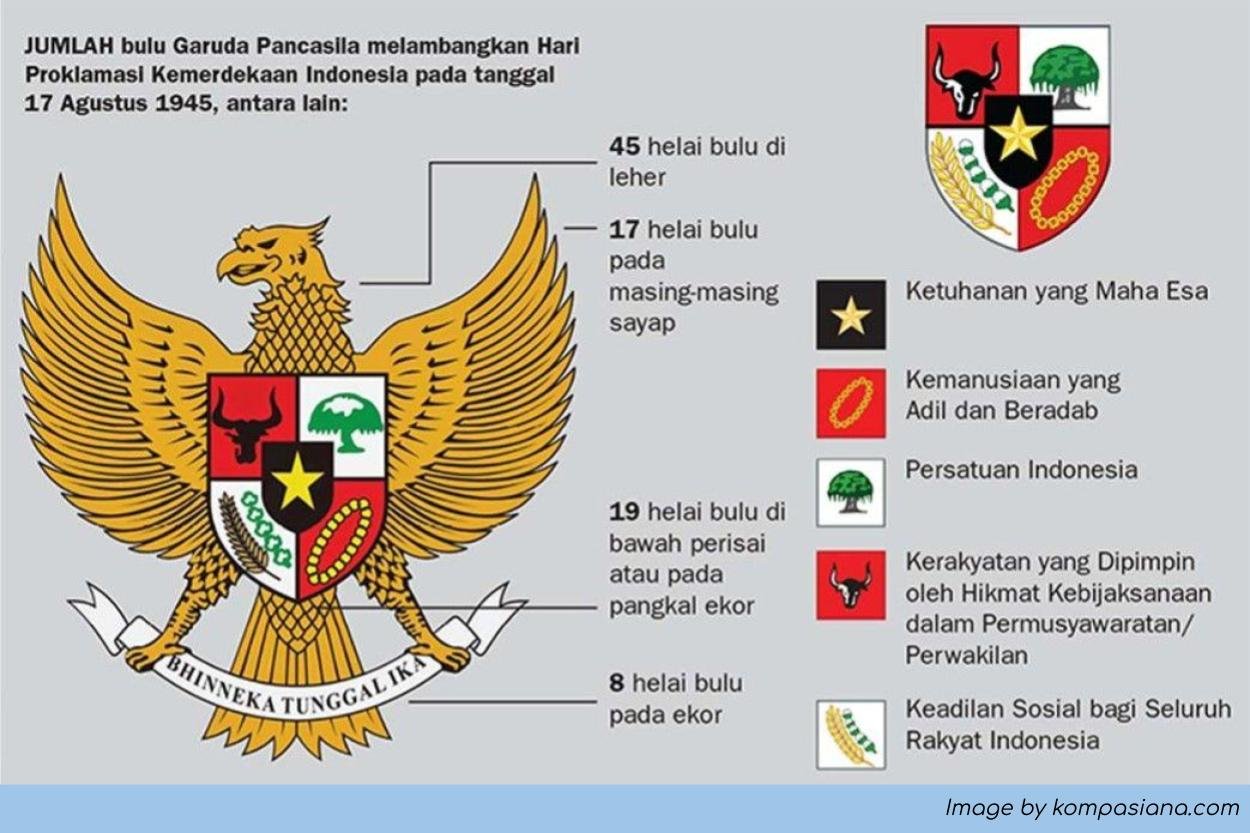
Ada yang belum tahu Arti Lambang Pancasila, Makna dan Bunyinya? Berikut ...
Makna 5 Simbol Pancasila Lengkap Dari Bintang Sampai Padi Dan Kapas

Makna 5 Simbol Pancasila Lengkap dari Bintang sampai Padi dan Kapas
Gambar Simbol Pancasila

Gambar Simbol Pancasila
Arti Simbol Pancasila – Artofit

Arti simbol pancasila – Artofit
12+ Gambar Lambang Pancasila Dan Silanya Terupdate - Koleksi Laksmi

12+ Gambar Lambang Pancasila Dan Silanya Terupdate - Koleksi Laksmi
Bab 1 Ayo, Mengenal Simbol-simbol Pancasila.pptx

Bab 1 Ayo, Mengenal Simbol-simbol Pancasila.pptx
Arti Simbol Pancasila – Artofit

Arti simbol pancasila – Artofit
Arti Lambang Garuda Pancasila

Arti Lambang Garuda Pancasila
5 Simbol Pancasila Sebagai Lambang Negara, Beserta Makna Dan Sejarahnya

5 Simbol Pancasila Sebagai Lambang Negara, Beserta Makna dan Sejarahnya ...
Arti Simbol Pancasila – Artofit

Arti simbol pancasila – Artofit
Modul Ajar Pendidikan Pancasila Kelas 11 Kurikulum Merdeka Tahun Ajaran

Modul Ajar Pendidikan Pancasila Kelas 11 Kurikulum Merdeka Tahun Ajaran ...
Simbol Pancasila 1-5, Gambar Maknanya

Simbol Pancasila 1-5, Gambar Maknanya